


ACHIEVEMENTS SINCE 2017

Regional Level
ECOWAS Migration Dialogue in West Africa (MIDWA)
FMM West Africa has supported the operationalization of MIDWA by setting up technical structures, support units and accountability.
MIDWA Ministerial Meeting
- 2017 MIDWA Ministerial Meeting: Accra, Ghana (12– 14 September)
Theme: “The Global Compact for Migration”
MIDWA Thematic Working Group (TWG) Meetings
FMM West Africa supported six TWGs since 2017.
- MIDWA TWG Meeting on Migration Data: Abuja, Nigeria (May 2017)
- MIDWA TWG Meeting on Border Management: Abuja. Nigeria (August 2017)
- MIDWA TWG Meeting on Return and Reintegration: Niamey, Niger (August 2017)
- MIDWA TWG Meeting on Mixed Migration: Saly, Senegal (May 2018)
- MIDWA TWG Meeting on Border Management, Migration, Return and Reintegration and Labour Migration: Abuja, Nigeria (July 2019)
- MIDWA TWG Meeting on Border Management, Migration, Return and Reintegration and Labour Migration: Lomé, Togo (August 2019)
Development of the MIDWA Website
The development of the MIDWA website is expected to be concluded in 2020. The website will serve as the center-point for the communication and sharing of information relevant to all aspects of migration within West Africa.
ECOWAS Heads of Immigration (HOI) Meeting
FMM West Africa supported the operationalization the ECOWAS Annual HOI Meeting
- 2017 HOI Meeting: Abuja, Nigeria (3 -4 August)
Key Publications
FMM West Africa supported the development of the following publications which are set to be validated at the 2020 MIDWA Ministerial Meeting:
- ECOWAS Regional Migration Policy
- Guidelines for Assessing the Level of Implementation by Member States of the ECOWAS Protocol on Free Movement of Persons, the Right of Residence and Establishment
- ECOWAS Border Management and Free Movement Manuals
- MIDWA Monitoring and Evaluation Framework
Timeline



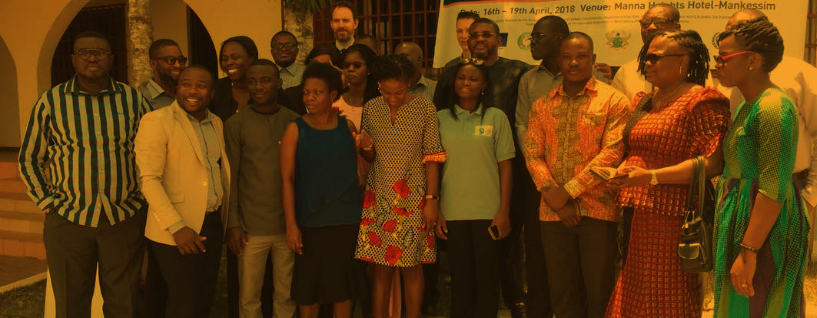
National Level
National Migration Profiles and Policies
FMM West Africa strengthened the capacities of national institutions of Member States to management migration by providing support for the development of the following 11 migration profiles and 9 migration policies since 2017:
| National Migration Profiles | National Migration Polices |
|---|---|
| Benin | Benin |
| Cabo Verde | Côte d’Ivoire |
| Côte d’Ivoire | The Gambia |
| The Gambia | Ghana (Labour Migration Policy) |
| Guinea Bissau | Guinée |
| Senegal | Senegal |
| Liberia | Liberia |
| Guinée | Senegal |
| Mali | Togo |
| Niger | |
| Senegal | |
| Sierra Leone |
Infusion of the Free Movement into the Training Curricula for Law Enforcement (Immigration)
FMM West Africa supported activities related to the infusion of free movement into the training curriculum of the following two immigration services to enhance the capacities of law enforcement officers, provide the baseline knowledge to effectively perform their jobs and improve the quality of their service.
- Nigeria Immigration Service: 19 December – 10 January 2019
- Senegalese Immigration: 15 – 17 October 2019
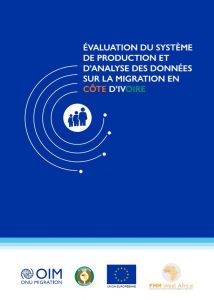
Key Publications
Local Level
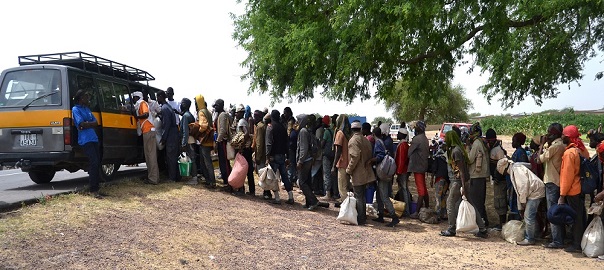
Advocacy and Sensitization
FMM West Africa supported The ECOWAS Commission in the following three cross-border advocacy and sensitization campaigns which targeted national stakeholders, law enforcement and border community members:
- Advocacy and Sensitization Campaign on the ECOWAS National Biometric Identity Card and Fighting Against Trafficking in Persons: Nigeria, Benin, Togo, Seme-Krake and Hilla-Condji/Sanve-Condji borders (23 – 26 April 2019)
- Advocacy and Sensitization Campaign on Free Movement and Migration: Ghana, Côte d’Ivoire and Elubo/Noe border (1 – 6 August 2019)
- Advocacy and Sensitization Campaign on Free Movement and Migration: Togo, Ghana and Kodjoviakope/Aflao border (11 – 12 February 2020)
Strengthening the Migration Dialogue for West Africa (MIDWA)
In line with the priorities identified by the baseline assessment on immigration and border management undertaken by the action in its initial implementation phase, FMM started providing advisory services and technical support to the ECOWAS Commission’s Free Movement of Persons and Tourism Directorate with the aim of implementing of the ECOWAS National Biometric Identity Card (NBIC) decision. The introduction of the NBIC is among the top priorities for the ECOWAS Heads of States and seeks to further promote safe and facilitated regional travel of ECOWAS citizens. At the request of the Free Movement and Tourism Directorate, the Project developed the ECOWAS training Manuals on Border Management and Free Movement. These ECOWAS training tools will enable the ECOWAS Commission to support and ensure comprehensive, high-quality and standardized training of ECOWAS Member States’ immigration officials and officers dealing with labour migration.
On counter-trafficking, the Project supported the Trafficking in Persons (TiP) Unit of the ECOWAS Commission in the development of its new Plan of Action on Combating Trafficking in Persons, based on an assessment of the impact of the previous plan of Action. Furthermore, the Project contributed to strengthening the ECOWAS TiP Unit’s Annual Review Meeting. Through the Project, efforts were made to re-establish contact between the ECOWAS TiP Unit and Cabo Verde, which had been dormant since 2009. This resulted in the appointment of a new National Focal Point (NFP) for TiP in Cabo Verde, and the active participation of two of its representatives in the 2014, and 2016 Annual Review Meeting. Cabo Verde’s presence at the 2014 Annual Review Meeting was its first time in five years. In the 2015 Annual Review Meeting, the Project again provided both technical expertise and logistical support to the ECOWAS TiP Unit. Two representatives each from 13 ECOWAS Member States participated in the meeting. Cabo Verde and Mali were, unfortunately, not represented. However, FMM organized the participation of two delegates from Mauritania as observers. Due to budget constraints, ECOWAS was unable to organize a review meeting in 2016, however, an Annual review meeting was organized in 2017, with representatives from 14 MS and 2 representatives from Mauritania as observers.
The project also strengthened the capacity of the ECOWAS TiP unit on monitoring and evaluation through the development of a new reporting template for MS. This template is already being used (from 2018) by Member States in submitting annual reports to ECOWAS on the implementation of the Plan of Action at the national level. These reports are used in compiling the Annual Synthesis report on the implementation of the ECOWAS Plan of Action. The project has supported the compilation of the synthesis report for the year 2012/2013, 2014, 2015 and 2016.
Support the organization of a regional ministerial meeting to formally launch the regional dialogue on free movement and migration (MIDWA).
The theme of the 2014 MIDWA Meeting was “Free Movement of Persons for Regional Integration and Economic Cooperation’’. Objectives of the meeting were to:
- Raise awareness on the ECOWAS Free Movement agenda and inform stakeholders of the ongoing revisions of the Free Movement Protocols;
- Assess the economic benefits of Free Movement for intra-regional trade and investment;
- Evaluate opportunities and challenges in the implementation of the Free Movement Protocol in Member States;
- Review and adopt the MIDWA Working Modalities.
The Experts’ meeting deliberated on related thematic issues and developed recommendations for validation by the Ministers. Based on the recommendations of the experts at the experts’ meeting, the MIDWA Working Modalities were reviewed and approved at the Ministerial meeting
Support the organization of subsequent annual MIDWA meetings
The 2015 MIDWA Experts and Ministerial meeting organized by ECOWAS Free Movement Directorate with the support of FMM West Africa, took place on 6-8 October 2015, in Nouakchott, Mauritania. The overall objective of the MIDWA 2015 meeting was to inform and guide regional level policy discussions on the solutions to tackle West-African irregular migration, in response to increasing migratory flows from West Africa to Europe. The meeting also served as a platform for preparatory discussions for the November 2015 Valletta Summit on Migration. The meeting specifically sought to:
- Assess the status of the existing irregular migration routes between West Africa, North Africa and the Mediterranean as well as the factors influencing irregular migration and conditions along the migration routes;
- Analyse existing policy and legal frameworks on the continent and in the region, governing migration issues and relevant to the on-going migration crisis;
- Share best practices as well as discuss and propose policy and operational solutions to addressing irregular migration in the following priority areas: strengthening border managements; addressing the drivers of irregular migration, ensuring the protection of migrants’ rights, and enhancing support to counter-smuggling efforts and improving intra- and inter-regional cooperation.
Provide technical guidance and expertise to the ECOWAS Commission
The FMM program provided support to the regional migration policy initially through only the technical expertise of the consortium staff. With the support of other donors, the ECOWAS Commission, under the leadership of the Free Movement and Tourism Directorate, developed a first draft of the regional migration policy. The policy is intended to be a follow-up to the ECOWAS Common Approach on Migration. The draft migration policy was shared with FMM for review and inputs. The FMM conducted a full revision of the document and provided its comments to the ECOWAS Commission in October 2014. In the following years ECOWAS reviewed further the document based on the inputs received from various stakeholders but couldn’t reach a satisfactory final draft.
The final Regional Migration Policy was presented to experts at the MIDWA Thematic Working Group Meeting on Border Management, Migration Data, Mixed Migration, Return and Reintegration and Labor Migration in Lomé, Togo
Organize a regional training of trainers
The training workshop brought together 20 participants from ECOWAS Member States and 3 participants from the ECOWAS Commission. The evaluation of training by the participants revealed a high level of satisfaction with regards to the overall quality of the activity (95% of satisfaction) and on how the different institutions will benefit from the participation of their representatives (100% of participants).
Challenges faced in relation to this activity include the non-participation of Cabo Verde, Guinea Bissau, Mauritania and Ghana in the training, despite invitation letters sent by the ECOWAS Commission and confirmations received from Ghana and Guinea Bissau. Guinea Bissau cancelled its participation at the last minute because of the presidential election, participants from Ghana did not show up, Cabo Verde designated its participants too late to find flights and Mauritania did not send any representative despite persistent follow up.
More information on the training can be found on the following links:
http://courses.itcilo.org/A157439/course_image_view?set_language=en
Support the ECOWAS Commission in developing
In response to the findings of the study, a draft document entitled: “Guidelines for the evaluation of the implementation of ECOWAS Protocols on Free Movement of Persons by ECOWAS Member States” was developed and shared with experts during a technical workshop held in Cotonou, Benin, in April 2017. The Draft Guidelines was finalized by a small group of experts at a technical review meeting held in July 2017 in Dakar, Senegal. The draft Guideline was also presented at the Head of Immigration (HOI) meeting held in Abuja, Nigeria in August 2017 and at the MIDWA meeting in Ghana in September 2017 for its validation. The HOI and MIDWA groups, which serves as experts Committee on Migration, validated the viability of the document testifying to the expediency of the guideline within the region and recommended that it should also be reviewed to cover the assessment of the ECOWAS Commission interventions in operationalization of the Free movement protocol and that an independent body be engaged to implement the evaluation. The Guideline was thereafter validated at the Council of Ministers meeting in Accra, Ghana, pending the review. Based on some technical recommendations, a final technical review meeting with about 10 experts was held in Accra, Ghana on the 4 and 5th of January 2018. The team recommended that a separate guideline for monitoring the implementation of the Free Movement Protocol by the ECOWAS Commission be developed as the parameters for evaluating ECOWAS Commission will not be the same as that of the Member States. The guideline document was finalized and renamed as: ‘Draft Guidelines for the Assessment of the Status of the Level of Implementation of The ECOWAS Protocol on Free Movement of Persons by Member States (A/P1/5/79)’. It has been submitted to the ECOWAS Commission since January 2018 and will be presented at the 2018 ECOWAS Heads of States Meeting for adoption
Organize a regional training seminar for the ECOWAS
Support the ECOWAS Commission in the development of regional guidelines and common operating procedures for migration data collection and management
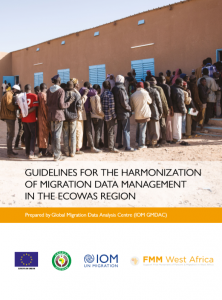
They provide standardized methodologies for data collection, including developing regional definitions, concepts, and key indicators (for identifying population groups) related to international migration statistics; best practices and tools in data analysis for migration policy development; standardized tools for collecting migration data; and best practices in short- and long-term management of migration data.
The structure and intended content of the guidelines were presented and endorsed at a regional workshop for migration data collection and management held in Lomé, Togo, in March 2016, under Activity 1.2.2. The guidelines contain a training kit which was tested during a national workshop on migration data management held in Ghana in July 2016 and will serve as a resource for migration data capacity building activities, including those envisioned under the project, such as the workshops for national institutions dealing with migration data
The guidelines and training package were finally piloted and approved during a regional training held in Abuja, Nigeria in May 2017. Experts from the national institutes of statistics and of the National Immigration agencies attended and produced recommendations for improvements. The approved guidelines and training package is available in English and in French and will be soon available in Portuguese (See 118). The English version was published in April 2019 and is available using the following links:
https://publications.iom.int/books/guidelines-harmonization-migration-data-management-ecowas-region
https://publications.iom.int/system/file/pdf/iom_ecowas_guidelines_2018.pdf
Organise a regional Training of Trainers on migration data collection and management
Following interventions in the area of migration data, ECOWAS has been included among the four priority RECs, in a 3-year capacity development project, funded by Swedish International Development Cooperation. IOM accompanied ECOWAS in the project preparatory workshop which was organised 30 April – 1 May 2018 in Addis Ababa. The project was launched in January 2019 and provides a good platform for sustainability of FMM project initiatives.
ECOWAS regional workshop on migration data management.
In order to approve and pilot the ECOWAS guidelines on Migration Data Collection and Management finalised on January 2017, a regional training was held in Abuja in May 2017. The training was meant to present and discuss the training package and confirm contents and methodology to cascade the training at the national level. The pilot training succeeded in producing final recommendations, to approve the guidelines and to enhance the coordination between the national institutes of statistics and the National Immigration Agencies. The training was cascaded at the national level from the second semester 2017 to the first semester of 2017 in 12 Member States namely Benin, Cote d’Ivoire, Cabo Verde, Guinea Bissau, Guinea Conakry, Liberia, Niger, Nigeria, Senegal, Sierra Leone, The Gambia and Togo.
Development of Migration Data Reporting Tools
For enhanced migration data collection and reporting, ECOWAS was supported to develop common indicators which will guide migration data exchange between ECOWAS and its Member States. The tools have been presented on two occasions to the migration data focal persons for their input, which informed refinement of the tool for more usability. Based on this tool, ECOWAS incorporated migration data in its round of data collection in 2018. A user-friendly guide will be prepared for the focal persons, who are expected to gather available data at the various Member States.
The Migration Data Reporting Tool was updated to enable Member state and ECOWAS collect data and aggregate data effectively. The updated tool was presented and tested at the MIDWA Migration Data Thematic Working Group meeting in July 2019. The tool was used to collect the 2018 Migration Data by the Member States. IOM is supporting ECOWAS to development the report of the 2018 Migration Data collected in the region.